Welcome to our Investigators class page 2025-26

We are the Year 6 class at Warren Hills Community Primary School.
Our class teacher is Mrs Reynolds. Mrs Smith and Mrs Williamson are the teaching assistants in our class.
PE this term on a Friday
Please ensure that your child has an indoor kit consisting of a Warren Hills P.E. T-Shirt, shorts and plimsolls and also an outdoor kit consisting of plain tracksuit bottoms or leggings, a Warren Hills P.E. T-Shirt, sweatshirt and pair of trainers. Long hair must be tied back and earrings removed (if your child is unable to remove earrings themselves, please ensure they are removed before school).

We Love Reading
In our class, we know how important reading is to help us learn and we follow a reading scheme in our school called Read, Write, Inc. We each have a home reading folder to bring our books home in every day and a yellow reading record. We enjoy reading at home and know how important it is to practise with our parents/carers regularly to help us become successful readers.
A note from the teacher: Please ensure that your child brings their home reading folder back to school every day and remember to encourage them to spend some time reading either to an adult or independently each day.
Topic Web |

2025-26
Topic 4 - World War II
A siren sounds, a building crumbles, a Spitfire zooms overhead. Take cover. It’s 1939 and Britain is at war. Deep down in the Anderson shelter, learn why nations are fighting and why child evacuees must make the long journey from their homes and families into unknown territory. Make do and mend. Cook up a family meal from meagre rations. Delve deep into a bygone era, when loose lips sunk ships. And, as peace is declared, let’s get ready to celebrate. Mr Churchill says ‘It’s an unconditional surrender.’
Topic 3 - Polar Opposites 2025-26
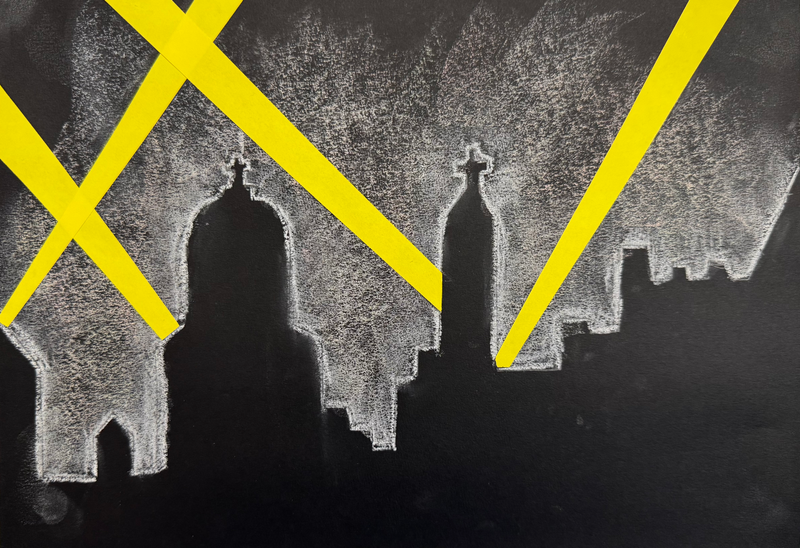
Welcome to the coldest places on our planet: the Arctic and the Antarctic. These lands are huge, icy and very wild. They can be stunningly beautiful, but they can also be dangerous. Freezing winds blow across the land, and temperatures can drop far below zero, so people and animals must find shelter to stay safe.
Brave explorers travel across slippery ice and deep snow, sometimes riding on sleds pulled by strong husky dogs. The ground can be tricky, so every step must be taken with care. Keep your eyes open, because amazing animals live here. Polar bears search for food, Arctic foxes dart across the snow, and many creatures are always on the move to survive.
Discover fascinating facts about the climate, freezing temperatures, habitats and ecosystems of these frozen worlds. Learn about the magical Northern Lights and create your own pastel artwork inspired by them. Wrap up warm, imagine sitting by a glowing fire, and prepare for an unforgettable journey into Earth’s coldest places.

Topic 2 2025-26
The Windrush
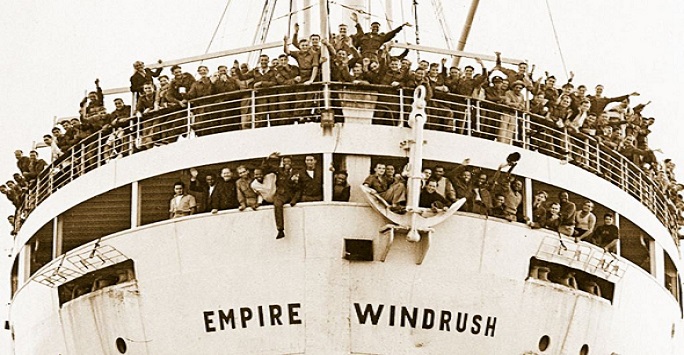
In this topic , Year 6 will be learning about the Windrush Generation and their important contribution to British history. Pupils will explore the story of the Empire Windrush ship, which arrived from the Caribbean in 1948, bringing people who helped rebuild Britain after the Second World War. Through history, art, music, and literacy, children will learn about the experiences of those who travelled to the UK, the challenges they faced, and the legacy they created in shaping modern British culture.
This topic encourages empathy, respect, and understanding as pupils reflect on themes of migration, identity, belonging, and equality. By studying real-life stories and creative works inspired by the Windrush Generation, children will gain a deeper appreciation of how diversity has enriched our communities and continues to shape who we are today.
Autumn Topic 1 2025-26
MEXICO
This term, Year 6 will be exploring the vibrant country of Mexico! Pupils will discover its rich culture, fascinating history, and diverse landscapes – from bustling cities and ancient Mayan ruins, to tropical rainforests. Through history, we’ll looking life in the ancient Mayan times and comparing it with life in the UK during the Stone Age, In geography we'll be learning about climate and the amazing climates. In art and design, children will be inspired by Mexican patterns, festivals, and folk art, including colourful Día de los Muertos (Day of the Dead) designs. Our topic will also include elements of music, food, and storytelling, helping pupils appreciate Mexico’s unique identity and global connections.
By the end of the topic, children will have a deeper understanding of this amazing country and its place in our world – celebrating diversity and broadening their global awareness.
For our first topic we enjoyed our Mexican Fiesta: smashing a pinata and trying a variety of Mexican foods.
Summer Term 2 2023-24
Pack up your pencils, pick up your paintbrushes and prepare to be amazed by the wonderful work of 19th and 20th century artists.
During this half term, we’ll look at a variety of art styles and artists of these centuries. We’ll talk about features of the artwork and sketch our favourite pieces. We’ll research important artwork of the 19th and 20th centuries online, choosing a favourite piece of art to describe in more detail. We’ll create pieces of art inspired by well known artists and use search engines to source images of modern art to put into a digital portfolio. We’ll express ourselves through poetry, stories, music and painting. Art can affect our feelings and emotions, and we’ll investigate whether everyone responds in the same way. We’ll also use found objects to create a surreal sculpture.
Summer Term 1 2023-24
We’re off on an exciting expedition with Charles Darwin and his crew on HMS Beagle. Can you trace his route across the vast ocean? Stop at the magical Galápagos Islands to see the amazing species that helped Charles Darwin to develop his theory of evolution by natural selection. Do you know what’s so special about a lava lizard, or why the blue-footed booby has blue feet? See how animals adapt to their environments over time and meet some of the world’s greatest explorers and naturalists. Imagine how humans will evolve in millions of years. It’s a scary thought. Ready to trace the origin of species? Let’s set sail.
In Science, we found out about Charles Darwin and his discoveries on the Galapagos Islands. One of his major discoveries was that the finches on different islands had different types of beaks. They had adapted to suit their surroundings. We experimented with different types of 'seed' and different impliments to represent the beaks to find out which beak types suited which types of food.


